Sodium Sulfide in Chemical Manufacturing: Functions, Applications and Grade Selection
Its role changes with the reaction. In one process, it helps convert a functional group into a different form. In another, its sulfur becomes part of the finished molecule or polymer.
For chemical manufacturers, these differences determine the raw-material requirements. A commercial sodium sulfide grade suitable for one application may require additional qualification—or may be unsuitable—for another.
This article examines the main applications and explains how manufacturers should evaluate sodium sulfide content, water, impurities and batch consistency.
1. What Does Sodium Sulfide Do in Chemical Manufacturing?
Three functions are particularly useful for understanding its applications.
| Function | What it means | Example application |
|---|---|---|
| Reducing agent | Participates in changing the oxidation state of another substance | Selected nitro-compound reduction reactions |
| Sulfur source | Supplies sulfur that becomes part of a product | Certain sulfur-containing intermediates and polymers |
| Chemical raw material | Is consumed in a manufacturing route | Sulfur dyes and selected inorganic sulfur products |
These functions can overlap. A particular process may use both the reducing behavior and sulfur-containing species associated with sodium sulfide.
Sodium sulfide is generally a consumed reagent in these applications. Calling it a “catalyst” without reference to a specific catalytic mechanism would misrepresent its role.
2. Sodium Sulfide in Sulfur Dye Manufacturing
Manufacturing a Dye Is Different from Applying It
Sodium sulfide can be involved in both sulfur dye production and textile dyeing, but the objectives differ.
During dye manufacturing, sulfur-containing reagents participate in creating or processing the dye product.
During textile dyeing, sodium sulfide may reduce an existing sulfur dye into a soluble form suitable for application to the fiber.
Industrial sodium sulfide manufacturers identify sulfur dye production and certain dye intermediates among its uses.
Its Role Depends on the Dye Route
Sulfur dyes are a diverse product group. The raw materials, sulfur-containing species and manufacturing stages vary between formulations.
A manufacturing route may involve sodium sulfide, sulfur and polysulfide-containing mixtures. The chemical role cannot be defined accurately from the finished dye’s color alone.
For purchasing, the dye producer should identify whether sodium sulfide is required as a reaction raw material, a reducing reagent or part of a formulation step.
What Should the Producer Evaluate?
A useful comparison should extend beyond whether the reaction reaches its endpoint.
Depending on the dye product, recommended checks include:
-
Finished dye strength and shade.
-
Solubility or dispersibility under the specified application conditions.
-
Insoluble residue.
-
Batch consistency.
-
Performance in the intended dyeing system.
These are evaluation criteria, not guaranteed improvements from changing sodium sulfide suppliers.
3. Sodium Sulfide as a Reducing Agent in Organic Synthesis
Selected Nitro-Compound Reductions
Sodium sulfide has been investigated as a reducing agent for selected aromatic and aliphatic nitro compounds. Published research also describes its use with certain nitro-containing heterocycles.
Such transformations can produce intermediates used in subsequent chemical manufacturing.
The commercial value lies in obtaining the required product with acceptable conversion, selectivity and purification requirements.
What Does Selectivity Mean?
A molecule may contain more than one reactive group. Selectivity describes whether the reaction favors the intended transformation while limiting unwanted changes.
A reducing agent that works well for one substrate may behave differently with another. Solvent, phase behavior and the chemical structure of the starting material can all matter.
Research on two-phase nitroaromatic reduction has examined aqueous sodium sulfide systems with different organic substrates, illustrating the importance of the complete reaction system.
Conversion Alone Is Not Enough
A high conversion result only shows that starting material has been consumed. It does not establish how much acceptable product has been obtained.
For supplier qualification, manufacturers should compare:
| Measurement | What it establishes |
|---|---|
| Conversion | Extent of starting-material consumption |
| Selectivity | Proportion directed toward the intended product |
| Isolated yield | Product recovered after work-up and purification |
| Product purity | Whether the finished intermediate meets specification |
| Impurity profile | Whether unwanted components have changed |
| Processing behavior | Whether separation and purification remain practical |
A raw-material change should be approved against the full product specification, rather than a single reaction measurement.
4. Sodium Sulfide as a Sulfur Source for Organic Intermediates
In suitable synthesis routes, sulfur supplied by sodium sulfide can become part of an organic product.
This differs from a reduction in which the purpose is to change another functional group without incorporating sulfur into the desired molecule.
Documented organic synthesis procedures include sodium sulfide-containing systems for preparing sulfur-linked aromatic compounds. For example, Organic Syntheses describes a route to an aromatic disulfide using sodium sulfide and sulfur.
This example establishes a route-specific use. It does not mean that sodium sulfide can produce every thiol, sulfide or disulfide through the same chemistry.
For procurement, the relevant question is:
Does the proposed sodium sulfide grade meet the requirements of the manufacturer’s validated synthesis route?
The presence of sulfur in the final product is not enough to establish suitability.
5. Sodium Sulfide in Polyphenylene Sulfide Production
Why PPS Is a Relevant Example
Polyphenylene sulfide, or PPS, is an engineering polymer with sulfur atoms in its backbone.
A conventional production route uses sodium sulfide and dichlorobenzene. Polymer manufacturer Samyang describes this chemistry in its PPS product information.
In this application, sodium sulfide supplies sulfur for polymer formation.
Why Raw-Material Control Matters
PPS manufacturing involves more than combining the starting materials. Polymer manufacturer DIC identifies dehydration, reaction and sodium chloride removal among the elements of its production process.
This makes water balance, inorganic residues and purification relevant to raw-material evaluation.
A producer may need tighter controls than those used for a general industrial application. The appropriate specification depends on the process and the required resin properties.
Are General Industrial Flakes Automatically Suitable?
No.
A grade sold for industrial use should not be described as “PPS grade” without the necessary specification and qualification evidence.
For PPS inquiries, the buyer should provide its required Na₂S assay, water specification, impurity limits and analytical methods. Suitability should be established through the producer’s approval process.
6. Sodium Sulfide in Other Inorganic Sulfur Products
Sodium sulfide can also be a raw material in selected routes to products such as sodium polysulfide and sodium thiosulfate. Industrial manufacturers list these among its downstream uses.
However, these are separate chemical products with different compositions.
| Product | Formula or general representation | Important distinction |
|---|---|---|
| Sodium sulfide | Na₂S | The raw material discussed in this article |
| Sodium hydrosulfide | NaHS | Different sodium-to-sulfur composition and solution chemistry |
| Sodium polysulfide | Na₂Sₓ | A sulfur-rich product family with variable composition |
| Sodium thiosulfate | Na₂S₂O₃ | A different sulfur oxyanion compound |
A manufacturer should specify which chemical is required and how its concentration is reported. Similar names do not establish equivalent reaction behavior.
7. Why Water Content Is a Major Purchasing Consideration
“Flakes” Describes Shape
The term sodium sulfide flakes describes the product’s physical form. It does not mean that the product is anhydrous.
Commercial flakes may contain substantial water alongside Na₂S and other components. A nominal 60% assay means that the product contains that proportion of Na₂S on the stated analytical basis; it does not establish that the remaining 40% is entirely water.
Different Processes Have Different Requirements
In an aqueous process, the water entering with the reagent can be included in the overall liquid balance.
In another process, water may need closer control or removal before a later stage. A commercial flake should therefore not be substituted for an anhydrous reagent without reassessing the material balance.
PPS manufacturing provides a practical example of why dehydration and downstream purification can be relevant to sodium sulfide use.
Confirm the Reporting Basis
Buyers should clarify:
-
Whether Na₂S content is reported on an as-received or dry basis.
-
Whether water is measured separately.
-
Which test methods are used.
-
Whether the specification refers to a minimum, maximum or typical value.
These details make quotations and laboratory results meaningfully comparable.
8. Which Impurities Should Chemical Manufacturers Review?
The right impurity limits depend on the process. A universal “high-purity” description is less useful than a clearly defined specification.
| Parameter | Reason to review it |
|---|---|
| Na₂S content | Establishes the active-reagent input |
| Water content | Supports solvent and material balances |
| Iron or other metals | Relevant where the reaction or product is metal-sensitive |
| Water-insoluble matter | Helps assess preparation residue and filtration requirements |
| Thiosulfate, sulfite or other specified sulfur species | Distinguishes Na₂S from other sulfur-containing components |
| Carbonate or other alkaline components | Helps characterize the overall raw material |
| Batch variation | Indicates how consistently the material meets the agreed limits |
A sodium sulfide manufacturer’s technical information specifically identifies reduced iron content as useful for iron-sensitive organic synthesis applications. This supports evaluating iron where the chemistry requires it, rather than assuming that all processes need the same limit.
Total sulfur is not a substitute for Na₂S assay. Different sulfur-containing substances can have different chemical functions.
9. Yellow or Red Sodium Sulfide Flakes?
NBWCHEM supplies yellow and red sodium sulfide flakes.
Color is useful for product identification, but it does not establish purity, water content or reaction suitability.
For chemical manufacturing, compare the documented grades using the same acceptance criteria. If a process requires low iron, specify a numerical limit and verify the result.
If product color is sensitive, assess the finished chemical after the complete purification process. The appearance of the incoming flakes alone cannot predict the finished product’s appearance.
Neither “yellow flakes” nor “red flakes” should be used as a substitute for an agreed chemical specification.
10. How Should a New Grade Be Qualified?
A useful qualification process links the incoming raw material to the finished product.
Confirm the Documents
Review the proposed specification, batch Certificate of Analysis, SDS and traceability information.
Where a critical parameter is missing, agree on how it will be measured before evaluating routine supply.
Compare Against an Accepted Reference
Use a documented reference grade and account for differences in actual Na₂S content and water.
Equal product weights do not necessarily represent equal reagent inputs.
Follow the Material Through Purification
A reaction may appear satisfactory while creating additional separation or purification work.
Record the relevant process observations and test the isolated product against its specification.
Check Repeatability
A successful single batch is useful evidence, but it does not establish long-term consistency.
The extent of qualification should reflect the sensitivity of the process and the consequence of a raw-material change.
11. Common Manufacturing Problems: What Should Be Investigated?
The following table provides a starting point for investigation.
| Observation | Checks to consider |
|---|---|
| Incomplete conversion | Actual reagent assay, material balance, raw-material identity and process records |
| Changed selectivity or by-product profile | Impurity differences, water balance and reaction conditions |
| Unexpected product color | Metal contamination, starting-material quality and purification history |
| Increased filtration residue | Insoluble matter, contamination and solids formed during processing |
| Variable isolated yield | Reaction performance, phase separation and product recovery |
| Higher wastewater treatment demand | Residual sulfide, salt load, wash volumes and changes in work-up |
| Batch inconsistency | Sampling, analytical methods, storage history and supplier variation |
These observations do not automatically establish that sodium sulfide is the cause. Compare retained samples and production records before assigning the source of the change.
12. Evaluate Cost per Acceptable Product
The lowest price per ton of sodium sulfide may not produce the lowest manufacturing cost.
A more useful comparison includes:
-
Delivered raw-material cost.
-
Actual Na₂S input.
-
Reaction yield and selectivity.
-
Purification and filtration requirements.
-
Solvent or water handling.
-
Waste treatment.
-
Product rejection or reprocessing.
For an initial active-material comparison:
Cost per ton of contained Na₂S = Delivered product price per ton ÷ Na₂S mass fraction
This calculation helps compare different assays. It does not replace process trials or account for differences in impurities and performance.
The final decision should consider the cost of producing material that meets the finished-product specification.
13. Storage and Process Safety
Sodium sulfide is hygroscopic and can change during exposure to air. Manufacturer information describes oxidation to thiosulfate, heat release during dissolution and hydrogen sulfide generation on contact with acids.
Keep the product sealed and follow its SDS for storage, handling and incompatible materials.
Chemical manufacturing requires particular attention to later process stages. If residual sulfide remains before an acid-containing operation, the process design must account for potential gas release. Work-up and waste treatment require the same technical review as the main reaction.
Hydrogen sulfide odor is not a reliable safety indicator. Facilities should use appropriate monitoring and engineered controls where exposure is possible.
14. Sodium Sulfide Supply for Chemical Manufacturers
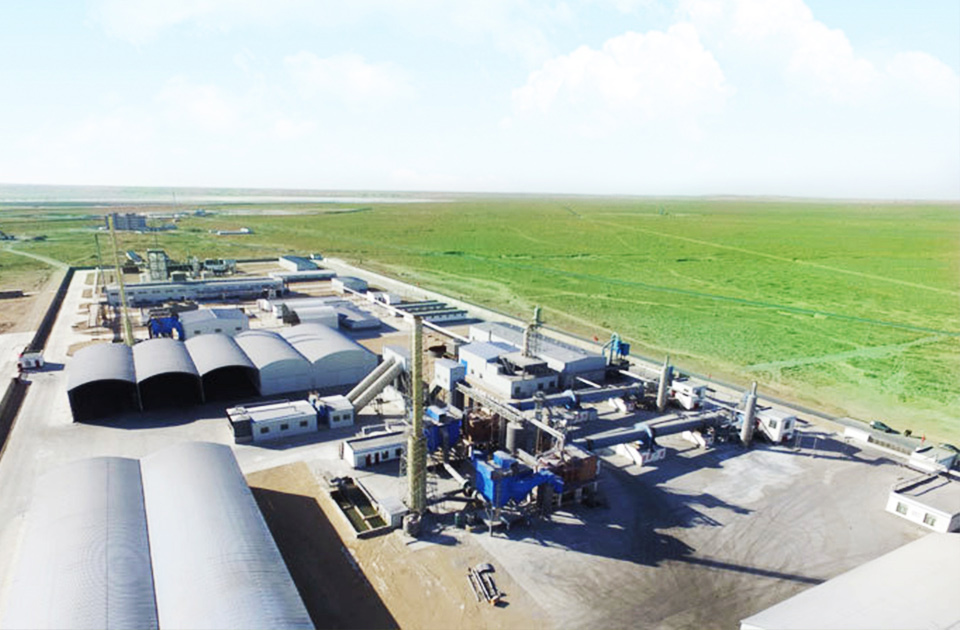
Gansu Nabowang Chemical Products Co., Ltd. (NBWCHEM) manufactures sodium sulfide in Gansu, China, and supplies yellow and red flakes for industrial customers.
Our minimum order quantity is 1 metric ton. Third-party inspection can be arranged before shipment, and export documentation can include customs declarations and certificates of origin.
For chemical-manufacturing inquiries, provide your required Na₂S content, water specification, impurity limits, packaging, quantity and destination. Where possible, include the specification of your currently approved raw material.
For sensitive synthesis or polymer applications, suitability should be established against the buyer’s requirements and validated process.
Related Article