Sodium Sulfide Market: Size, Share and Trends in 2026–2027
Published market forecasts generally point toward continued growth. However, market-size estimates differ, and the practical outlook varies between applications.
For industrial buyers, the most useful market analysis connects headline figures with product specifications, regional supply, process requirements and delivered cost.
Research reviewed: October 2026. Market figures below are attributed estimates and forecasts, not independently audited global sales totals.
1. What Does the Sodium Sulfide Market Include?
Sodium sulfide, Na₂S, is supplied in different commercial forms and grades, including flakes, hydrated crystals and solutions.
Reports may segment the market by physical form, purity, iron content, application or region. These classifications are not always directly comparable.
For example, “low iron” describes an impurity specification, while “flakes” describes physical form. A product can belong to both descriptions.
Three distinctions are particularly important when interpreting market data:
-
Sodium sulfide is different from sodium hydrosulfide, NaHS.
-
Product tonnage is different from tonnage calculated as contained Na₂S.
-
Chemical circulating inside a recovery process is different from externally purchased material.
Before using a report for commercial planning, check which products and transactions its market definition includes.
2. How Large Is the Global Sodium Sulfide Market?
Two publicly available research summaries provide the following estimates:
| Research publisher | 2026 global market estimate | Longer-term forecast | Reported CAGR |
|---|---|---|---|
| Coherent Market Insights | USD 680.5 million | USD 919.9 million by 2033 | 4.4%, 2026–2033 |
| Fortune Business Insights | USD 701.2 million | USD 1,026.1 million by 2034 | 4.9%, 2026–2034 |
Sources: the respective publishers’ public report summaries.
These two estimates place the 2026 market at approximately USD 680–701 million within their respective models. This is a comparison of selected estimates, not a verified range covering all published research.
Their forecasts suggest moderate expansion in market value. They should not be interpreted as proof that physical consumption or product prices will grow at the same rate.
Why Do Estimates Differ?
Differences can arise from product coverage, geographic coverage, revenue assumptions, data sources and the treatment of internal production or merchant sales.
The public summaries do not provide enough methodological detail to reconcile every difference.
A consistent forecast should therefore retain one publisher’s starting value, forecast period and growth rate. Combining figures from different reports can create a misleading projection.
3. Sodium Sulfide Market Share by Region
Asia Pacific Is a Major Market
Grand View Research estimates that Asia Pacific represented 54.3% of global sodium sulfide market revenue in 2024. Fortune Business Insights reports a 55.56% regional share in 2025.
Both identify the region as the largest market in their analysis.
However, these figures come from different research models. They should not be used to claim that Asia Pacific gained exactly 1.26 percentage points between 2024 and 2025.
China’s Position
Grand View Research identifies China as a major production and consumption center, supported by its chemical manufacturing and downstream industrial base.
For buyers, China is therefore an important sourcing market to evaluate. Supplier selection should still distinguish actual production capability, approved product specifications and export experience.
This article does not assign China a precise global production or export share because a consistent, independently verified dataset was not established.
Regional Demand Is Not the Same as Regional Supply
A region’s market-revenue share does not establish its share of global manufacturing capacity.
Similarly, a country can be an important producer, exporter and consumer at the same time. These measures answer different commercial questions.
4. Which Applications Account for Demand?
Coherent Market Insights estimates that pulp and paper represents 23.7% of sodium sulfide market revenue in 2026 within its classification. This is an attributed segment estimate rather than a universal industry statistic.
The main applications have different purchasing characteristics:
| Application | Main role of sodium sulfide | Important demand consideration |
|---|---|---|
| Leather processing | Unhairing in suitable beamhouse processes | Hide throughput and chemical use per unit of production |
| Textile dyeing | Reduction of suitable sulfur dyes | Dye-system selection and use of alternative reducing agents |
| Mineral processing | Sulfidization or selective depression | Ore mineralogy and the approved flotation circuit |
| Industrial wastewater treatment | Precipitation of certain dissolved metals | Wastewater composition and treatment-route selection |
| Chemical manufacturing | Reducing agent or sulfur-containing raw material | Process qualification and impurity requirements |
| Kraft pulp production | Component of cooking liquor | Chemical recovery and external make-up requirements |
These applications explain where demand originates. They do not support assigning exact shares without a consistent market dataset.
5. Sodium Sulfide Market Trends to Watch
Mining Demand Depends on the Processing Route
Mining activity creates opportunities for sodium sulfide where the mineralogy and flotation system require it.
However, additional ore production does not automatically generate proportional sodium sulfide consumption. Some circuits use sodium hydrosulfide, other reagents or different processing routes.
Commercial implication: identify the plant’s actual reagent specification and consumption history before estimating its purchasing potential.
Wastewater Treatment Offers Application-Specific Opportunities
Sodium sulfide can remove certain dissolved metals through precipitation. Its usefulness depends on the wastewater chemistry and the ability to manage precipitated solids and residual sulfide.
Industrial producers identify selected metal-bearing process streams as an established application.
Commercial implication: wastewater-treatment demand should be evaluated by treatment project and process, rather than by total wastewater volume.
Leather Processing Faces Pressure to Reduce Chemical and Pollution Loads
Hair-saving and enzyme-assisted processes can change sulfide requirements per unit of hide processed.
UNIDO describes hair-saving technology as a way to reduce the organic pollution associated with dissolving hair. Research has also demonstrated lower-sulfide enzyme-assisted approaches under specific conditions.
Commercial implication: stable leather output does not necessarily mean unchanged sodium sulfide consumption.
Textile Processes Are Becoming More Diverse
Conventional sulfur dyeing remains relevant, while pre-reduced dye products and alternative reducing systems offer different chemical requirements.
Archroma markets pre-reduced sulfur dye systems, and published research has investigated reducing sugars as alternatives to conventional sulfide-based reduction.
Commercial implication: textile customers should be segmented by their actual dyeing system.
Product Specifications Create Different Supply Opportunities
General industrial applications and sensitive synthesis routes may require different impurity controls.
For example, a sodium sulfide manufacturer specifically identifies low-iron material for iron-sensitive organic synthesis.
Commercial implication: a documented specification can be more useful than broad claims such as “premium quality” or “high purity.”
6. Pulp Production Does Not Translate Directly into Flake Purchases
Sodium sulfide is important in kraft pulping, but kraft mills recover and reuse sodium and sulfur chemicals.
External requirements depend on losses, recovery performance and the mill’s chemical balance. Valmet describes several approaches to controlling sulfidity and sodium–sulfur balance.
Consequently, pulp production capacity cannot simply be multiplied by a cooking-chemical figure to calculate the market for purchased sodium sulfide flakes.
This distinction matters when estimating addressable demand or evaluating potential customers.
7. What Determines Supplier Market Share?
Reliable supplier market-share calculations require comparable sales data and a clearly defined total market.
The following figures are not interchangeable:
| Measure | What it describes |
|---|---|
| Installed capacity | Potential output under stated operating assumptions |
| Actual production | Material manufactured during a specified period |
| Sales volume | Material sold during that period |
| Export volume | Material shipped internationally |
| Revenue share | Sales value relative to the defined market |
| Volume share | Sales quantity relative to the defined market |
A manufacturer with large installed capacity does not necessarily hold an equally large sales share.
The public sources reviewed do not establish dependable, comparable company-level percentages. This article therefore does not present a “top manufacturers by market share” ranking.
Supplier assessment is better supported by production evidence, batch documentation, delivery records and application qualification.
8. Sodium Sulfide Prices: What Should Buyers Monitor?
Market-value growth is not the same as price growth. Revenue can rise because of volume, pricing, product mix or exchange-rate changes.
The sources reviewed do not establish a consistent global transaction-price series sufficient to calculate a dependable annual sodium sulfide price increase.
For quotations, compare the same:
-
Na₂S concentration and impurity limits.
-
Product form and packaging.
-
Order quantity.
-
Delivery location and trade terms.
-
Quotation date and validity.
-
Included freight and handling costs.
Buyers should also monitor production availability, energy and raw-material costs, freight and currency movements as possible cost drivers. Their effect should be checked against actual supplier quotations.
A single supplier quote is useful procurement information, but it is not a global market-price benchmark.
9. Outlook for 2026–2027
The selected reports support an outlook of continued, moderate market-value growth. They do not establish an exact 2027 outcome.
Our assessment is that purchasing opportunities will depend on three factors:
Downstream activity: production and treatment demand in industries that already use sodium sulfide.
Chemical intensity: how much sodium sulfide each process consumes, including the effect of recovery, substitution and process improvement.
Supply qualification: whether a supplier can consistently meet the buyer’s specification and delivery requirements.
A stronger market could result from increased activity in suitable mining, treatment and manufacturing applications. A weaker outcome could follow slower industrial production, reduced consumption per unit of output or substitution by other systems.
These are planning scenarios, not additional numerical forecasts.
10. Sourcing Sodium Sulfide from NBWCHEM
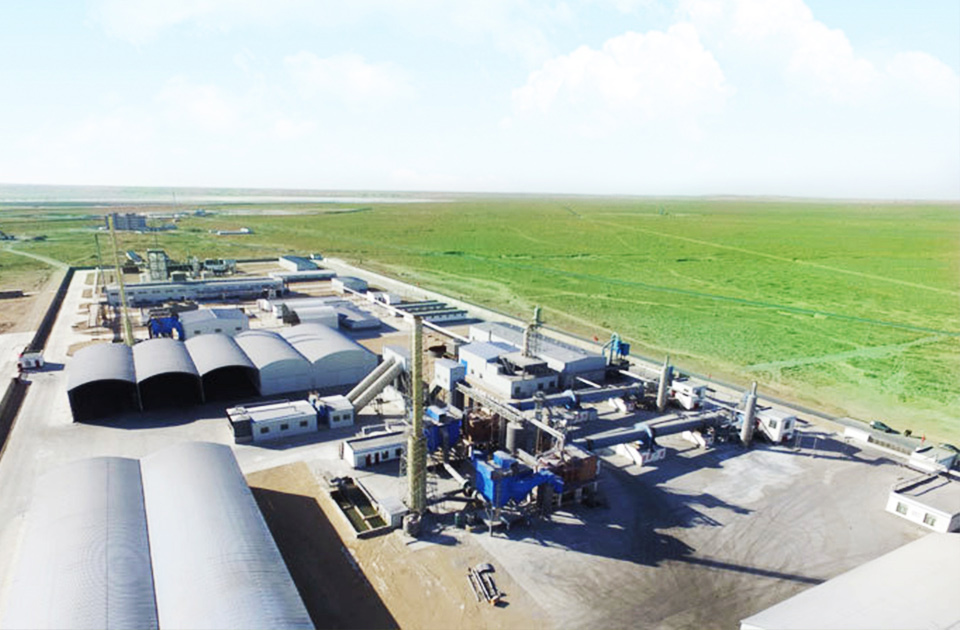
Gansu Nabowang Chemical Products Co., Ltd. (NBWCHEM) manufactures sodium sulfide in Gansu, China, and supplies yellow and red flakes for industrial customers.
Our minimum order quantity is 1 metric ton. Third-party inspection can be arranged before shipment, and export documentation can include customs declarations and certificates of origin.
For a quotation, provide your required Na₂S content, impurity limits, application, packaging, order quantity and destination.
We recommend comparing documented specifications and delivered cost, then validating the proposed grade in the intended process.
Related Article