Sodium Sulfide in Mineral Processing: Sulfidization, Flotation and Reagent Selection
In other circuits, sodium sulfide can act as a depressant, helping prevent particular minerals from floating.
These different functions explain why sodium sulfide cannot be described simply as a chemical that increases mineral recovery. Its effect depends on the mineral, reagent combination, water chemistry and operating conditions.
For mining companies and mineral-processing plants, successful use starts with understanding what the reagent is intended to do in a specific circuit.
1. What Does Sodium Sulfide Do in Mineral Processing?
Sodium sulfide supplies dissolved sulfide species that can interact with mineral surfaces and dissolved components in the pulp.
Its functions include:
| Function | Purpose in an appropriate circuit |
|---|---|
| Sulfidizing agent | Modify suitable oxidized mineral surfaces before flotation |
| Surface-conditioning reagent | Establish conditions that support the selected collector system |
| Depressant | Reduce the floatability of selected minerals during separation |
Research demonstrates these different roles: sodium sulfide has been studied as a sulfidizing reagent for malachite and as a depressant in chalcopyrite–molybdenite separation.
The intended function should be defined before a plant evaluates product grade or consumption.
2. Why Do Some Oxidized Minerals Need Sulfidization?
Flotation depends partly on differences in mineral surface properties. A collector helps make the target mineral sufficiently hydrophobic to attach to air bubbles and enter the froth.
However, an oxidized mineral surface may respond poorly to a collector that works effectively on a sulfide mineral.
Sulfidization changes the surface chemistry. In suitable systems, treatment with sodium sulfide creates metal-sulfide-containing surface products that can support subsequent collector interaction.
Research on malachite describes this as a heterogeneous solid–liquid reaction, with copper sulfide phases forming on the remaining mineral.
The objective is surface modification, not conversion of the entire ore particle into a sulfide mineral.
The resulting surface must still respond to the selected collector and flotation conditions. Sulfidization is one part of the separation process, not a replacement for the collector.
3. Sodium Sulfide in Copper Oxide Flotation
Malachite as an Important Example
Malachite is a copper carbonate mineral frequently studied in sulfidization flotation.
In a suitable process, sodium sulfide treatment modifies its surface before a compatible collector is applied. The aim is to create conditions that allow more effective collector interaction and subsequent bubble attachment.
This makes sodium sulfide relevant to certain copper oxide and mixed oxide–sulfide ore circuits.
However, a result obtained with purified malachite cannot be transferred directly to a plant treating a complex ore. The plant feed may contain multiple copper minerals, gangue, clays and partially liberated particles.
Why the Dosage Window Matters
Insufficient treatment may leave the target surface inadequately modified.
Excess sodium sulfide can also be detrimental. Research has demonstrated depression of malachite flotation when excess sulfide is present. Consequently, additional reagent can reduce floatability rather than improve it.
This creates an important operational requirement: identify a suitable treatment range for the actual ore and collector system.
A plant should not assume that declining recovery always indicates insufficient sodium sulfide.
4. Sodium Sulfide in Lead and Zinc Oxide Flotation
Lead and zinc oxide minerals require separate consideration because their surface chemistry and collector response differ.
Cerussite
Cerussite, PbCO₃, is a lead carbonate mineral for which sulfidization followed by a suitable collector can be an effective flotation approach.
Research on cerussite has investigated the formation and characteristics of the sulfide-containing surface layer and its relationship to flotation response.
Smithsonite
Smithsonite, ZnCO₃, is a zinc carbonate mineral. Sulfidization–amine flotation is an established subject of research, including studies examining how pretreatment changes amine adsorption and flotation behavior.
Smithsonite should not automatically be treated with the same collector scheme used for cerussite. Research comparing these minerals has identified important differences in their sulfide surface layers and response to xanthate systems.
| Mineral | Example of a investigated approach | Main consideration |
|---|---|---|
| Malachite | Sulfidization followed by a compatible thiol collector | Surface treatment and excess-sulfide control |
| Cerussite | Sulfidization followed by a suitable xanthate system | Surface conversion and collector response |
| Smithsonite | Sulfidization followed by an amine-based system | Mineral-specific adsorption and gangue selectivity |
These examples identify possible processing routes. They are not universal formulations for every copper, lead or zinc ore.
5. How Can Sodium Sulfide Also Act as a Depressant?
A reagent that supports one mineral’s flotation can suppress another mineral under different conditions.
In selected copper–molybdenum separation circuits, sodium sulfide can be used to depress copper sulfide minerals while molybdenite is recovered through an appropriate flotation system.
This is a different objective from activating an oxidized copper surface through sulfidization.
Water chemistry can complicate the separation. A study of chalcopyrite and molybdenite found that copper ions altered the depression behavior and hindered separation under the tested conditions.
The practical lesson is that a reagent name alone does not explain its function. Buyers should identify whether sodium sulfide is being purchased for:
-
Oxide mineral sulfidization.
-
Selective depression.
-
Another validated surface-conditioning application.
That distinction affects the trial design and the performance criteria.
6. Which Factors Control Performance?
Mineralogy and Liberation
A chemical assay showing total copper, lead or zinc does not explain how those metals occur in the ore.
For reagent evaluation, establish the principal valuable minerals, their association with gangue and their degree of liberation. Otherwise, poor recovery may be attributed to sodium sulfide when the underlying limitation is mineral accessibility.
Particle Size and Slimes
Particle-size distribution should be recorded during comparative testing. Changing the grind or the proportion of fine material makes it harder to isolate the effect of a reagent change.
Any decision to deslime should also account for valuable metal reporting to the removed fraction.
Collector Selection
The collector must be compatible with the treated mineral surface. The difference between cerussite and smithsonite illustrates why a successful reagent combination for one mineral should not automatically be applied to another.
Conditioning Sequence and Time
Sulfidization is a reaction that develops over time. Research on smithsonite has also investigated changes in the sulfide surface layer after its formation.
This makes the interval between surface treatment and subsequent flotation a relevant part of test design.
pH, Redox Conditions and Water Quality
A useful plant record should include pH and, where relevant, oxidation–reduction potential, alongside reagent additions and water-source information.
These measurements describe different aspects of the system. A matching pH does not establish that two pulps have the same sulfide concentration or surface chemistry.
Target conditions should be established for the circuit rather than copied from a different mine or laboratory study.
7. Why Can Sodium Sulfide Consumption Be High?
Not all sulfide added to a flotation circuit reaches the intended surface in an effective form.
Research on copper–molybdenum separation identified oxidation, interactions with minerals and dissolved metal ions, and aeration as contributors to sodium sulfide consumption.
For a plant investigating increased consumption, useful questions include:
-
Has the ore blend changed?
-
Has the process-water source or recycle ratio changed?
-
Are chemical preparation and dosing records consistent?
-
Has the supplied Na₂S content changed?
-
Have aeration, residence time or operating conditions changed?
-
Is the measured residual sulfide consistent with the dosing history?
High consumption should trigger an investigation of the circuit. It does not by itself prove that the supplier’s product is weak.
8. How Should Flotation Results Be Evaluated?
Recovery and Grade Must Be Considered Together
Recovery measures the proportion of feed metal reporting to the selected product.
Concentrate grade describes the concentration of that metal in the product.
An operating change that increases recovery may also increase the recovery of unwanted material. A better result therefore cannot be established from recovery alone.
For a simple mass-balance calculation:
Metal recovery (%) =
(Concentrate mass × Concentrate metal grade) ÷
(Feed mass × Feed metal grade) × 100
Masses should use the same dry basis, and grades should be expressed consistently.
Recommended Trial Indicators
| Indicator | What it helps establish |
|---|---|
| Target-metal recovery | Whether more valuable metal reaches the concentrate |
| Concentrate grade | Whether selectivity remains acceptable |
| Tailings assay | Whether valuable metal losses have changed |
| Mass pull | How much total material enters the concentrate |
| Reagent consumption | Chemical demand per unit of feed |
| Repeatability | Whether the result persists across comparable tests |
| Downstream suitability | Whether the concentrate meets the receiving process’s requirements |
A purchasing decision should reflect the overall metallurgical result and operating cost.
9. How Should a New Sodium Sulfide Grade Be Tested?
Use representative ore samples and compare the proposed product with an accepted reference grade.
The comparison should account for actual Na₂S content. Equal product weights do not supply equal active material if the assays differ.
A useful evaluation sequence is:
-
Confirm the product specification and batch analysis.
-
Establish a reference flotation result.
-
Compare grades under matched ore and process conditions.
-
Evaluate a suitable range of reagent additions.
-
Repeat promising results to assess consistency.
-
Proceed to larger-scale validation when justified.
Laboratory success should not be presented as a guaranteed plant result. Recycled water, circulating loads and variable ore feed can change performance at scale.
10. Yellow or Red Sodium Sulfide Flakes for Mining?
NBWCHEM supplies both yellow and red sodium sulfide flakes.
Neither color alone establishes suitability for a flotation circuit. Product selection should consider the agreed specification, handling requirements and metallurgical results.
| Purchasing parameter | Reason to review it |
|---|---|
| Na₂S content | Basis for active-material comparison |
| Water-insoluble matter | Relevant to preparation-system residue and handling |
| Iron and other specified impurities | Helps assess compatibility with the circuit |
| Physical condition | Identifies abnormal caking, contamination or moisture exposure |
| Packaging | Must suit storage and handling arrangements |
| Batch traceability | Supports investigation of changes in performance |
A higher-priced grade is not automatically more economical, and a lower-priced grade is not automatically poorer value. The deciding evidence should be the documented specification and plant-relevant testing.
11. Comparing Purchase Price with Operating Cost
Price per ton of flakes is only one part of the comparison.
For active-material comparison:
Cost per ton of contained Na₂S =
Delivered product price per ton ÷ Na₂S mass fraction
For example, a hypothetical 60% product delivered at USD 450 per ton has a contained-Na₂S cost of:
USD 450 ÷ 0.60 = USD 750 per ton of contained Na₂S
This arithmetic does not establish an operating dose or predict recovery.
A fuller comparison should consider reagent consumption per ton of ore, handling costs, treatment requirements and the value of the resulting concentrate.
12. Common Problems and What to Investigate
| Observation | Investigation priorities |
|---|---|
| Recovery remains low after increased addition | Possible excess-sulfide depression, mineralogy, liberation and collector compatibility |
| Recovery rises but concentrate grade falls | Selectivity, gangue recovery, mass pull and the full reagent scheme |
| Consumption increases unexpectedly | Ore blend, water chemistry, assay, preparation and oxidation losses |
| Performance varies between shifts | Feed variation, dosing calibration, conditioning and measurement practices |
| Laboratory results are not reproduced at the plant | Sample representativeness, recycled water, circuit configuration and operating variability |
| Preparation equipment accumulates residue | Insoluble matter, contamination and the approved preparation procedure |
These checks are starting points for technical investigation. They should not be treated as automatic diagnoses.
13. Sodium Sulfide and Sodium Hydrosulfide Are Not Identical
Sodium sulfide is Na₂S, while sodium hydrosulfide is NaHS.
Both can supply sulfide species and appear in mineral-processing applications, but their product concentrations and effects on solution chemistry differ.
A plant should not substitute one for the other kilogram for kilogram. Any change requires a revised material balance and validation of the resulting operating conditions.
For purchasing, identify the chemical explicitly on the inquiry, specification and shipping documents.
14. Handling, Storage and Environmental Management
Sodium sulfide is corrosive, and contact with acids can release toxic hydrogen sulfide gas. Preventing uncontrolled contact with acidic materials is essential during storage, preparation and effluent handling.
Store the supplied product in sealed packaging under the conditions stated in its SDS. Inspect damaged or moisture-exposed bags before use.
At the plant, chemical preparation and dosing areas need appropriate containment, ventilation and operating procedures. Residual sulfide in process water or discharge should be managed through the site’s approved treatment system.
Odor is not a reliable hydrogen sulfide alarm. Gas monitoring and trained emergency response are necessary where the risk assessment identifies potential exposure.
15. Sodium Sulfide Supply for Mineral-Processing Plants
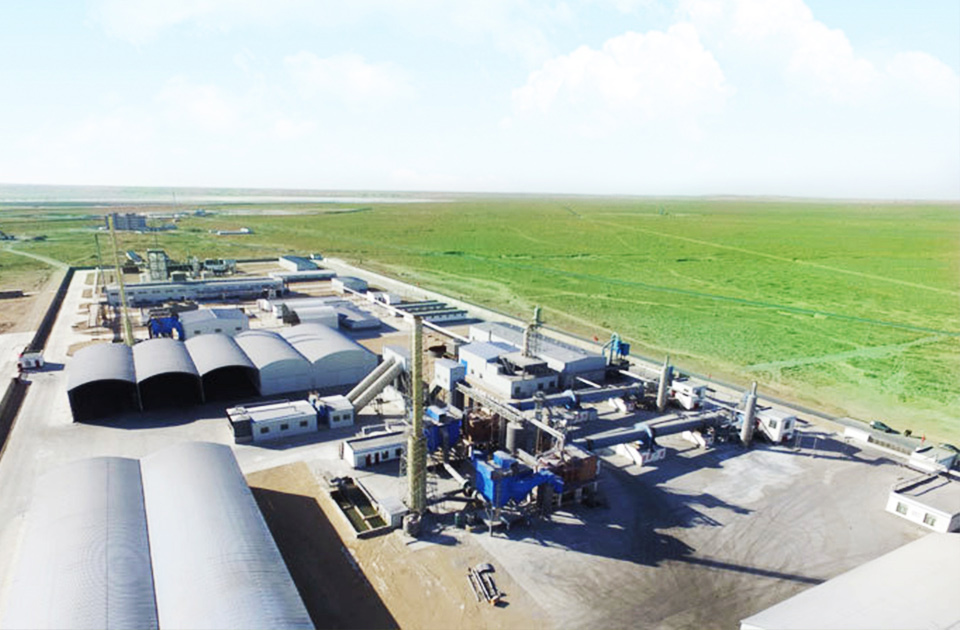
Gansu Nabowang Chemical Products Co., Ltd. (NBWCHEM) manufactures sodium sulfide in Gansu, China, and supplies yellow and red flakes for industrial customers.
Our minimum order quantity is 1 metric ton. Third-party inspection can be arranged before shipment, and export documentation can include customs declarations and certificates of origin.
For a relevant quotation, provide your required Na₂S content, impurity limits, packaging, order quantity and destination. Identifying whether the product will be used for oxide flotation or selective depression also helps clarify the application.
We recommend agreeing on the chemical specification and validating the proposed grade with representative ore before changing routine supply.
Related Article