Sodium Sulfide in Wastewater Treatment: Heavy Metal Precipitation and Process Control
The application is especially relevant to certain metal-bearing industrial streams. However, effective treatment requires more than adding a precipitating chemical. Wastewater composition, reaction control, particle separation and residual sulfide management all influence the result.
Sodium sulfide transfers suitable dissolved metals into a solid phase; it does not destroy the metals. The resulting sludge must still be recovered, treated or disposed of appropriately.
1. Why Is Sodium Sulfide Used in Industrial Wastewater Treatment?
Some industrial wastewaters contain dissolved metals that cannot be removed adequately by ordinary settling or filtration.
Sodium sulfide provides sulfide species that react with suitable metal ions, forming low-solubility compounds. This makes chemical precipitation possible before solid-liquid separation.
Industrial chemical manufacturers identify heavy-metal removal from selected process streams as an established use of sodium sulfide.
Potential applications include suitable streams from metal finishing, nonferrous-metal processing and other manufacturing operations. Research has also investigated sodium sulfide treatment of metal-bearing refinery effluents.
The decision to use it should follow wastewater characterization and treatability testing. An industry name alone cannot establish whether the process will work.
2. How Does Sodium Sulfide Remove Dissolved Metals?
Formation of Metal Sulfide Precipitates
For a divalent metal, the precipitation reaction can be represented in simplified form as:
M²⁺ + S²⁻ → MS(s)
Here, M²⁺ represents a dissolved metal ion, and MS(s) represents a solid metal sulfide.
This equation illustrates the material balance. Actual aqueous chemistry is more complex: the distribution of dissolved sulfide species depends on pH, while metal speciation depends on the wastewater composition.
EPA treatment documentation describes sulfide precipitation as the formation of metal sulfides through the addition of sulfide-containing reagents.
Precipitation Is Only the First Step
Once formed, the particles must be removed from the water.
If fine metal sulfide particles remain suspended and leave with the treated effluent, the plant may still report an unacceptable total-metal concentration.
The complete treatment objective is therefore:
Convert dissolved metals into separable solids, remove those solids, and control the remaining dissolved contaminants and sulfide.
3. Which Metals Can Be Treated?
Research has demonstrated sodium sulfide precipitation for metals including copper, zinc, cadmium and lead in tested wastewater systems. Other studies have investigated nickel alongside copper and zinc.
| Metal | Main consideration during evaluation |
|---|---|
| Copper | Determine how much is dissolved, particulate or complexed |
| Zinc | Assess precipitation together with residual sulfide and solids separation |
| Lead | Confirm the final total-metal result after separation |
| Cadmium | Validate the required low residual concentration using suitable analysis |
| Nickel | Investigate complexing agents and the actual chemical form present |
This table identifies candidates for evaluation, not guaranteed removal performance.
A process effective for one dissolved metal may not treat every metal in a mixed stream equally well. It also should not be assumed to remove all metal-containing oxyanions or every oxidation state through the same reaction.
4. Sulfide Precipitation vs. Hydroxide Precipitation
Hydroxide precipitation is another common approach to dissolved-metal treatment. It uses suitable alkaline conditions to form metal hydroxide solids.
Sulfide precipitation forms different compounds and may offer advantages for particular wastewater compositions.
| Comparison | Hydroxide precipitation | Sulfide precipitation |
|---|---|---|
| Main solid formed | Metal hydroxide | Metal sulfide |
| Chemical approach | Adjustment of alkalinity and pH | Addition of a suitable sulfide source with controlled conditions |
| Potential limitation | Metal-specific solubility and interference from complexing agents | Residual sulfide, gas hazards and fine precipitate separation |
| Evaluation requirement | Establish the appropriate conditions for the metal mixture | Establish precipitation, sulfide control and separation performance |
| Possible role | Primary metal removal | Primary treatment or an additional removal stage |
Research has demonstrated lower residual metal concentrations and reduced interference from some chelating agents with sulfide precipitation under tested conditions. The same work emphasizes the difficulty of controlling excess sulfide.
This does not make sulfide precipitation the best option for every site. The appropriate comparison includes treatment reliability, chemical demand, equipment, sludge handling and the applicable discharge requirements.
5. Can Sodium Sulfide Treat Complexed Metals?
Why Complexing Agents Matter
A metal may be bound to a complexing or chelating agent rather than present as a freely available ion. This can change its response to precipitation.
Two wastewaters with the same total copper concentration, for example, may require different treatment because the copper is present in different chemical forms.
What Sulfide Treatment Can Offer
Sulfide precipitation can be useful for some streams that are difficult to treat through hydroxide precipitation alone. However, its effectiveness depends on the metal, ligand, concentrations and process conditions.
EPA-supported bench-scale investigations specifically examined sodium sulfide precipitation in the presence of common chelating agents. Their scope reinforces the need to consider complexation during process selection.
For purchasing and treatment evaluation, identify known chelating agents, cleaning chemicals and process additives. A total-metal analysis alone may be insufficient.
6. Where Does Sodium Sulfide Fit into a Treatment System?
A conceptual treatment arrangement can include the following stages:
| Stage | Purpose |
|---|---|
| Wastewater characterization and segregation | Identify compatible streams and major contaminants |
| Equalization, where appropriate | Reduce fluctuations in flow and composition |
| Controlled precipitation | Convert suitable dissolved metals into solids |
| Particle conditioning | Support separation where coagulation or flocculation is needed |
| Solid-liquid separation | Remove the metal-bearing precipitate |
| Polishing and residual-sulfide management | Address remaining contaminants |
| Sludge treatment | Prepare solids for recovery or authorized disposal |
This is a planning framework rather than a universal operating sequence.
EPA guidance recommends site-specific treatability testing to establish precipitation chemicals, pretreatment needs and requirements for both treated water and sludge.
The detailed arrangement should be designed around the actual wastewater and the site’s existing equipment.
7. Why Adding More Sodium Sulfide Can Create Problems
Insufficient Addition
An insufficient available sulfide supply may leave some target metals dissolved.
However, a high outlet metal result does not automatically prove underdosing. It may also reflect complexation, incomplete mixing or poor removal of precipitated solids.
Excess Addition
Once the useful precipitation demand has been satisfied, additional reagent can remain as excess sulfide.
That creates a separate treatment burden and can increase hydrogen sulfide risk. EPA documentation emphasizes careful sulfide control to avoid unnecessary excess and subsequent treatment requirements.
The objective is to meet the treatment requirement with controlled residuals, not to maximize reagent addition.
There is no universal dose suitable for all industrial wastewater. Metal load, competing reactions, product assay and operating variability must be considered.
8. Why pH Matters—but Is Not Enough
pH influences both metal chemistry and the distribution of sulfide species.
A fall in pH can increase the potential for hydrogen sulfide release. At the same time, a suitable pH reading does not prove that metal precipitation is complete or that excess sulfide is absent.
For evaluation, combine pH with relevant measurements such as:
-
Influent and outlet metal concentrations.
-
Dissolved and total metals.
-
Residual sulfide.
-
Flow and reagent consumption.
-
Suspended solids or turbidity.
-
Other site-specific control measurements.
Sulfide-selective measurement has been investigated as a way to control reagent addition and selective metal precipitation. Such instrumentation still requires validation for the actual process matrix.
A measurement target from a research experiment should not be copied directly into an industrial operating procedure.
9. Why Can the Water Still Fail a Metal Test After Precipitation?
Dissolved Metals and Total Metals Are Different
A dissolved-metal result generally represents the fraction passing the specified filtration procedure.
A total-metal result can also include metal contained in suspended particles, depending on the sampling and analytical method.
A plant may therefore achieve effective chemical precipitation while failing to retain the resulting solids.
Fine Particles Can Be Difficult to Separate
Metal sulfide precipitates can form fine or colloidal particles. Research has investigated controlled particle growth and membrane retention specifically to improve separation.
This makes clarification and filtration performance important parts of the treatment assessment.
Useful comparisons include:
| Result pattern | What to investigate |
|---|---|
| Dissolved and total metals both remain high | Chemistry, complexation, loading and reaction conditions |
| Dissolved metals are low but total metals remain high | Suspended precipitate carryover and separation performance |
| Metals are acceptable but sulfide is high | Excess addition or inadequate residual-sulfide treatment |
| Results fluctuate sharply | Influent changes, sampling, equalization and control reliability |
The table is an investigation guide, not a substitute for analytical confirmation.
10. What Happens to the Metal-Bearing Sludge?
Precipitation concentrates metals into a solid stream.
The sludge needs evaluation for composition, dewatering behavior, stability and the requirements of its intended destination.
Possible routes include metal recovery or disposal through an appropriate authorized facility. A metal-rich precipitate is not automatically a saleable by-product.
Research has demonstrated selective precipitation capable of producing relatively pure metal sulfide solids under controlled conditions, suggesting recovery opportunities in suitable systems. Industrial feasibility still depends on purity, quantity, contaminants and downstream acceptance.
Sludge management should be included in the treatment decision from the beginning. A low dissolved-metal result does not eliminate the environmental responsibility associated with the removed metals.
11. How Should a Plant Test Sodium Sulfide Treatment?
Treatability testing should use representative wastewater, including realistic variations where production conditions change.
A useful test plan should answer:
-
Which metals are present, and in what forms?
-
Does precipitation achieve the required dissolved-metal result?
-
Can the formed particles be separated with practical equipment?
-
What residual sulfide remains?
-
How much sludge is generated, and how does it dewater?
-
Does performance remain acceptable as influent composition changes?
Testing should follow the full proposed process through separation and any polishing stage. Measuring only the liquid immediately after chemical addition does not establish the performance of the complete system.
When comparing suppliers, document actual Na₂S content and use the same wastewater sample and evaluation method.
12. Selecting Sodium Sulfide Flakes for Wastewater Treatment
NBWCHEM supplies yellow and red sodium sulfide flakes. Selection should be based on the agreed specification and treatment trials.
| Purchasing parameter | Why it matters |
|---|---|
| Na₂S content | Establishes the active-material basis for comparison |
| Water-insoluble matter | Helps assess preparation residue and additional solids |
| Iron and other relevant impurities | Supports the wastewater and sludge material balance |
| Batch consistency | Improves predictability of chemical preparation and use |
| Packaging condition | Helps identify moisture exposure or contamination |
| Traceability | Supports quality review when performance changes |
Color alone does not establish treatment efficiency.
A product advertised as low iron should have a stated, verifiable iron limit. Similarly, an economical grade should be judged by its actual treatment performance rather than its appearance.
13. Compare Total Treatment Cost, Not Only Price per Ton
A meaningful cost comparison includes more than the purchase price of sodium sulfide.
Evaluate:
-
Delivered chemical cost.
-
Consumption per cubic meter of wastewater or unit of metal load.
-
Preparation and handling requirements.
-
Other treatment chemicals.
-
Residual-sulfide management.
-
Sludge dewatering and disposal.
-
Monitoring, maintenance and operational reliability.
A lower-cost reagent can become more expensive overall if its use increases downstream treatment or solids-handling requirements.
Conversely, a more expensive grade should provide a measurable operational benefit to justify the premium.
14. Hydrogen Sulfide Safety and Chemical Storage
Sodium sulfide is corrosive, and contact with acids can release toxic hydrogen sulfide gas. This risk must be addressed in chemical storage, preparation, wastewater routing and maintenance procedures.
Keep the product sealed and protected from moisture under the conditions stated in its SDS. Separate incompatible materials and prevent uncontrolled mixing of sulfide-bearing and acidic streams.
Where exposure is possible, the facility needs appropriate ventilation, gas detection and emergency arrangements.
Do not rely on smell to determine whether hydrogen sulfide is present. Exposure can impair the sense of smell. Suspected releases require trained response, and contaminated tanks or pits must not be entered for an unprotected rescue.
15. Sodium Sulfide Supply for Industrial Water Treatment
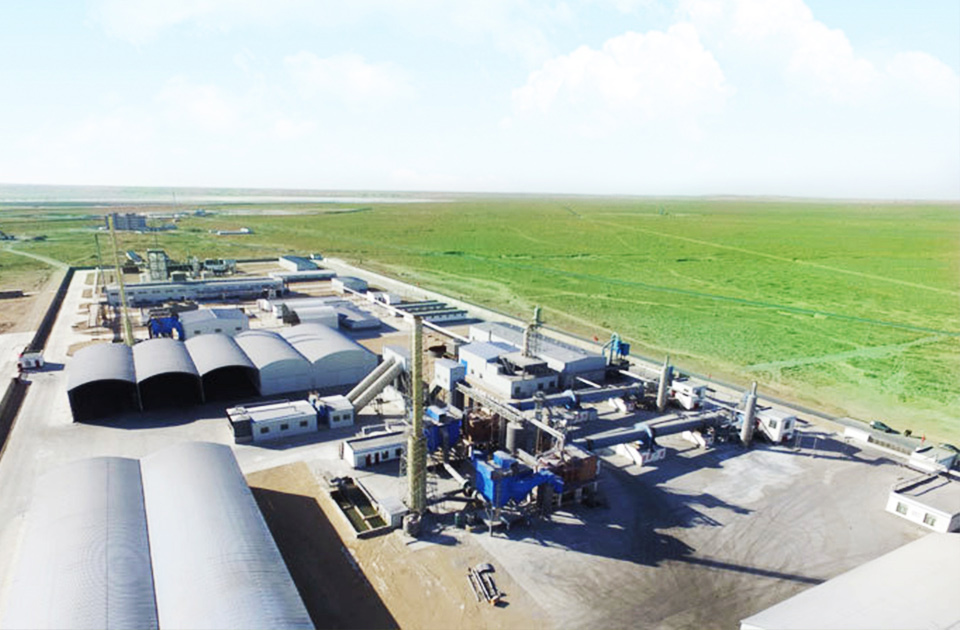
Gansu Nabowang Chemical Products Co., Ltd. (NBWCHEM) manufactures sodium sulfide in Gansu, China, and supplies yellow and red flakes for industrial applications.
Our minimum order quantity is 1 metric ton. Third-party inspection can be arranged before shipment, and export documentation can include customs declarations and certificates of origin.
For a quotation, provide your required Na₂S content, impurity limits, packaging, quantity and destination. If you are evaluating a new grade, include your currently accepted product specification and relevant treatment requirements.
Product selection should be supported by an agreed specification and representative wastewater testing.
Related Article